Printmaking Technique
The Plaster Block Print
The plaster block print is but one of several outlets for Helen Siegl’s creative talent. Born in Vienna, she worked there as a printmaker, children’s book illustrator, designer, and window-display artist before moving to the United States in 1953 to join her husband, Theodor Siegl, now conservation and technical advisor to the Pennsylvania Academy of the Fine Arts.
Since arriving in the United States, she has held a solo exhibition in Philadelphia and participated in several open exhibitions. She is a member of the Philadelphia Print Club and the American Color Print Society.
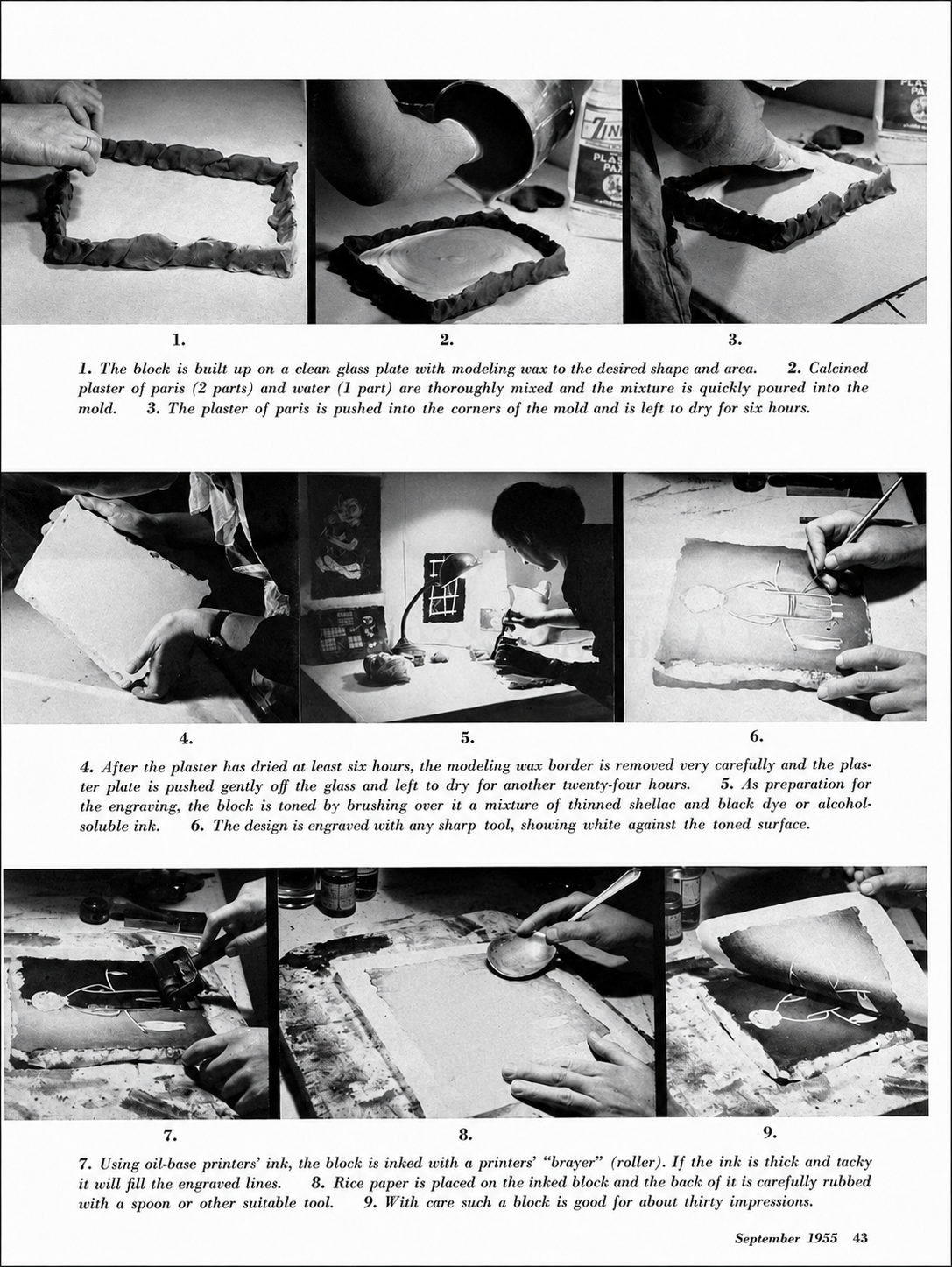
The pictures and captions explain nearly everything one needs to know about plaster-block printing, but the importance of choosing the right paper should be emphasized. Very thin rice paper produces the best results. Thick, heavy paper cannot make sufficiently close contact with the plaster block to create a sharp print or an even tone across background areas.
Mrs. Siegl devised the plaster block as a substitute for woodblocks, which were difficult to obtain during wartime. As so often happens with substitutes, the plaster block opened a fascinating new field for artistic expression.