Helen Siegl’s biography

Biography

Theodor Siegl

Paintings conservator · Artist · Teacher

Theodor “Ted” Siegl brought a painter’s eye and a scientist’s patience to the care of historic art. At the Philadelphia Museum of Art, his methodical work helped preserve paintings for generations while establishing conservation as a vital museum profession.

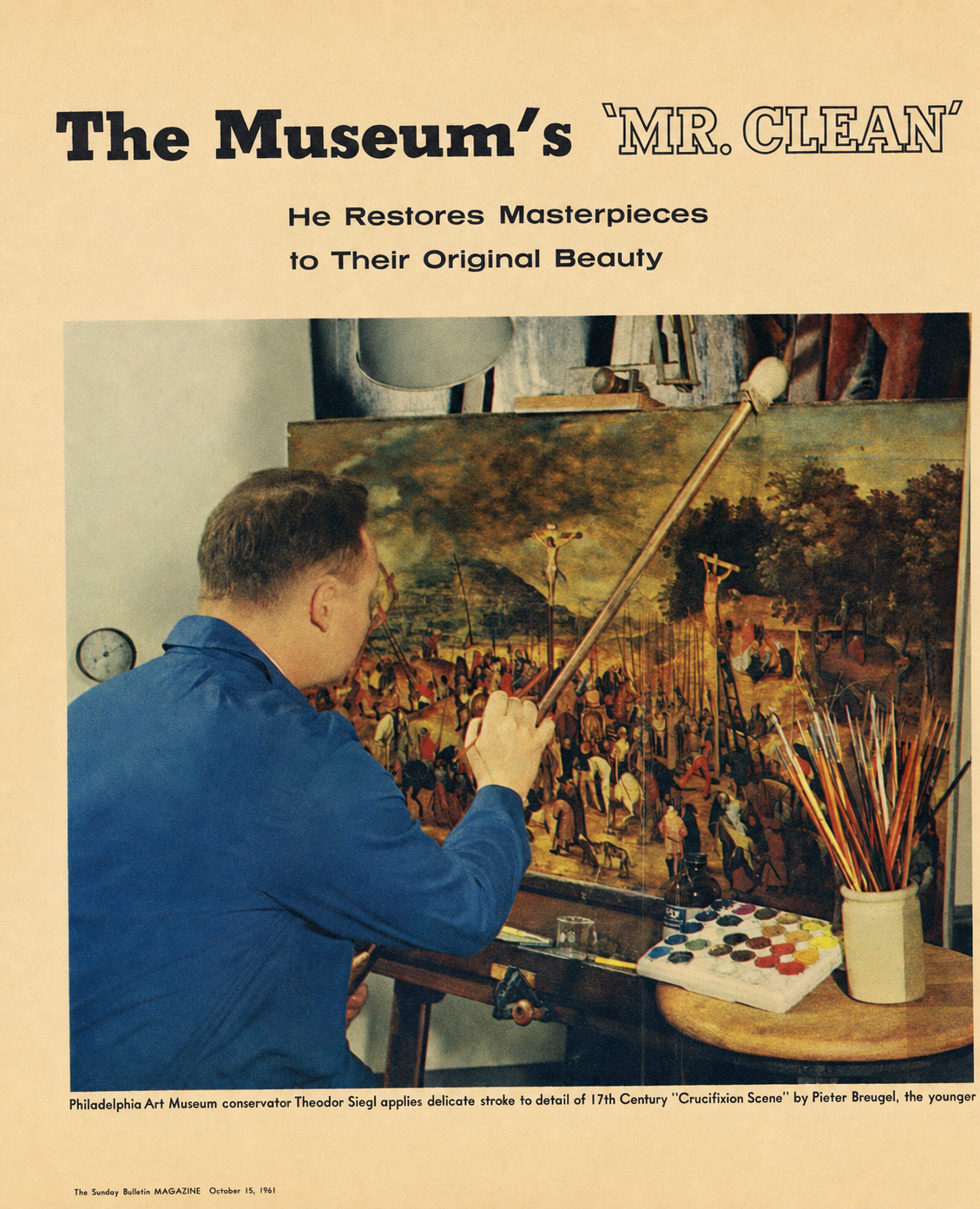
Theodor Siegl conserving a seventeenth-century painting at the Philadelphia Museum of Art
At work on a painting after Pieter Bruegel, 1961

Overview

Born in Czechoslovakia, Siegl trained in art conservation at Vienna’s Academy of Fine Arts. During the Second World War he served in a German tank unit, was wounded in Bavaria, and became a prisoner of the U.S. Army. By 1961, at age thirty-four, he was working as a professional paintings conservator at the Philadelphia Museum of Art.

Siegl married artist Helen Katherine Thérèse Haselberger in Montréal on September 3, 1952. Their life together joined two complementary vocations: Helen created prints and illustrations, while Theodor cared for the artistic inheritance of earlier centuries. They raised eight children in Philadelphia before his death on September 4, 1976.

Defining conservation · 1951

Christ Rejected: A Monumental Responsibility

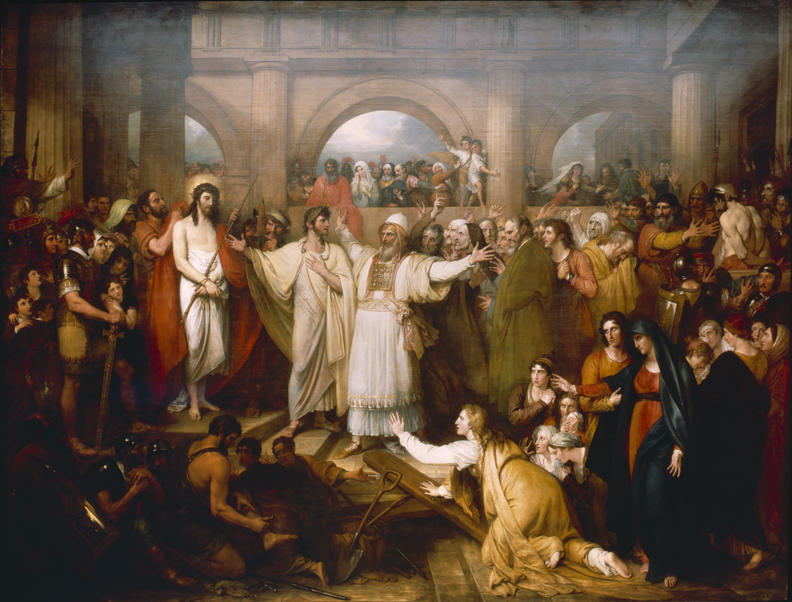
Before The Gross Clinic, Theodor Siegl undertook the cleaning and conservation of one of the Pennsylvania Academy of the Fine Arts’ most imposing treasures: Benjamin West’s vast Christ Rejected.

Christ Rejected, an 1814 monumental oil painting by Benjamin West
Benjamin West, Christ Rejected, 1814. Oil on canvas, 16 feet 8 inches × 21 feet 8 inches. Pennsylvania Academy of the Fine Arts, Joseph Harrison, Jr. Collection.

For years, Christ Rejected and West’s Death on the Pale Horse had hung too high on the Academy’s walls to be properly seen or cared for. Their scale and inaccessible placement made the paintings especially vulnerable to neglect and deterioration.

PAFA’s annual report records that both monumental canvases were taken down and that Christ Rejected underwent a thorough conservation during the summer through the work of Theodor Siegl, then the Academy’s conservator. Cleaning, conserving, and reinstalling the painting in Gallery B was described as one of the institution’s major activities of the year.

The project joined physical endurance with technical judgment. Siegl’s treatment returned a colossal work of American art to public view and established, early in his career, the principle that would define his vocation: great paintings survive only when skilled care makes their continued life possible.

Artist
Benjamin West
Painted
1814
Scale
16 feet 8 inches × 21 feet 8 inches
Conserved
1951 by Theodor Siegl
Collection
Pennsylvania Academy of the Fine Arts

Sources: PAFA collection record for Christ Rejected and the Pennsylvania Academy of the Fine Arts annual report documenting Theodor Siegl’s conservation work.

Teaching, family & legacy

Family, Partnership, and a Shared Life in Art

One created. One preserved. Together, they built a family life devoted to the enduring power of art.

Helen left postwar Vienna for Montréal, where she married Czechoslovak-born paintings conservator Theodor Siegl on September 3, 1952. They later settled in Philadelphia, beginning a new chapter defined by opportunity, family, and an enduring commitment to the arts.

While Helen devoted herself to original prints, illustrations, and books, Theodor pursued a distinguished career preserving great works of art. As the first professional conservator at the Philadelphia Museum of Art, he established the museum’s conservation department and earned recognition as a respected paintings conservator. His work helped ensure that masterpieces would survive for future generations.

Their professions were different yet complementary. Helen created images that celebrated faith, family, social justice, and the dignity of everyday life. Theodor preserved the artistic achievements of the past through meticulous craftsmanship and scholarly care. Together, they shared a profound respect for art, history, and the responsibility of cultural stewardship.

Their home reflected those values. While raising eight children, they fostered an environment where creativity, curiosity, and craftsmanship were part of daily life. Conversations about drawing, printmaking, conservation, literature, music, and history were woven naturally into family life, creating an atmosphere in which artistic expression was both encouraged and lived.

Helen’s prints reveal an artist deeply engaged with humanity, while Theodor’s conservation work quietly ensured that humanity’s artistic heritage would endure. One created; the other preserved. Together, their lives formed a partnership dedicated to the enduring power of art.

Theodor taught materials and techniques at the Pennsylvania Academy of the Fine Arts. His legacy survives in the paintings he helped safeguard, the practical knowledge he passed to artists, and the family culture of artistic care he shared with Helen. Preserving and sharing their work reflects a principle they both embraced: works of art deserve not only to be created, but also to be cared for, documented, and passed on to future generations.
“Now I encourage all of my students to take that course and really try to learn it, because I made mistakes because of that, that I might not have if I’d studied that course a little bit more.”

Elizabeth Osborne, recalling Ted Siegl’s materials and techniques course
Continue to Helen Siegl’s biography

Inside the workshop · 1961

A painting is a structure, not just an image

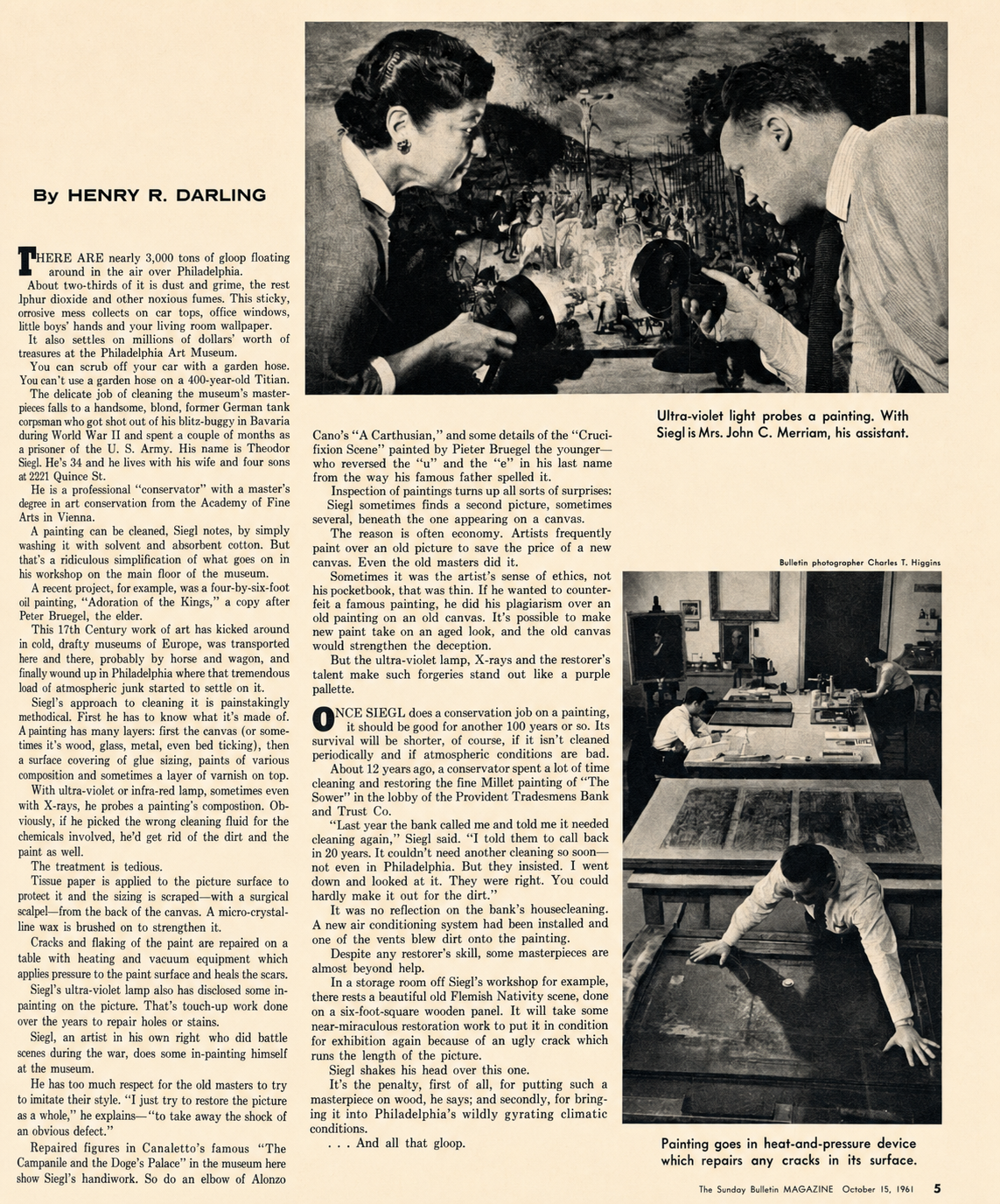
When The Sunday Bulletin Magazine visited Siegl at the Philadelphia Museum of Art, it found a conservator working at the meeting point of art, chemistry, and patient handcraft.

Before touching a painting, Siegl first determined what it was made of: its support, sizing, pigments, earlier repairs, and varnish. Ultraviolet and infrared lamps—and, when necessary, X-rays—could expose overpainting, hidden images, or materials that would react badly to the wrong solvent.

“I just try to restore the picture as a whole—to take away the shock of an obvious defect.”

— Theodor Siegl, 1961

The aim was never to repaint an old master in his own hand. Siegl made losses visually quiet while preserving the distinction between the original work and the conservator’s repair.

The 1961 Sunday Bulletin photo story showing Theodor Siegl and his assistant examining and treating paintings
Photographs by Charles T. Higgins for The Sunday Bulletin Magazine, October 15, 1961.
  1. 01

    Examine

    Identify the support, paint layers, varnish, old repairs, and hidden changes.

  2. 02

    Protect

    Face vulnerable paint with tissue before work begins on the reverse.

  3. 03

    Stabilize

    Strengthen weak canvas and repair cracks or flaking with controlled heat and pressure.

  4. 04

    Integrate

    Clean cautiously and retouch losses only enough to restore visual unity.

Theodor Siegl working on Thomas Eakins’s The Gross Clinic in 1961
Theodor Siegl at work on Thomas Eakins’s The Gross Clinic, 1961. Philadelphia Museum of Art archival photograph.

Case study · 1961

Preserving The Gross Clinic

When Siegl examined Thomas Eakins’s monumental painting for a traveling retrospective, he determined that it was too fragile to leave Philadelphia. Its lightweight linen canvas had become brittle, and a two-piece plywood backing installed in 1940 was flexing along a central seam. Nail heads beneath the canvas were causing bumps, paint loss, and the threat of punctures.

Siegl documented the condition, developed a treatment plan, and led a team that included artist Louis B. Sloan. With the painting secured face-down and its surface protected by tissue and fine cotton cloth, the plywood was removed layer by layer. The thick adhesive beneath it was cleared, and the original canvas was relined with strong linen and mounted on a new stretcher.

Cleaning followed a strict principle: yellowed varnish and earlier retouching could be removed only without the slightest harm to Eakins’s paint. A new colorless varnish protected the surface and separated the team’s carefully limited inpainting from the original. By using removable materials and restricting retouching to actual losses, Siegl left the treatment open to reassessment by future conservators.

Document first Protect the original Use removable materials Plan for future care

Sources: Philadelphia Museum of Art archival webpage, “The 1961 Conservation Treatment of The Gross Clinic”; Theodor Siegl, “The Conservation of the ‘Gross Clinic,’” Philadelphia Museum of Art Bulletin, vol. 57, no. 272 (Winter 1962), pp. 237–264.

Works mentioned in 1961

Repairs made nearly invisible

The profile identified Siegl’s work on Canaletto’s The Campanile and the Doge’s Palace, Alonso Cano’s A Carthusian, and details in a Crucifixion Scene by Pieter Bruegel the Younger. It also followed his treatment of a seventeenth-century Adoration of the Kings after Pieter Bruegel the Elder.

The enemy in the air

Philadelphia’s grime

The article framed conservation against the city’s severe atmospheric pollution. Siegl recalled a Millet painting that became nearly obscured soon after cleaning because an air-conditioning vent blew dirt directly across its surface—a vivid lesson in how a painting’s environment determines its survival.

This page draws on an OCR transcription of “The Museum’s ‘Mr. Clean,’” by Henry R. Darling, The Sunday Bulletin Magazine, October 15, 1961, with photographs by Charles T. Higgins. The source was edited and condensed for readability.